
Chardonnay 76
Chardonnay, clone INRA-ENTAV 76, is a premium, globally sought-after, and officially certified clonal selection of the famous French white wine grape variety Chardonnay, developed by the state institute INRA-ENTAV in 1971. In professional winemaking circles, clone 76 is classified as a distinctly qualitative, premium clone with outstanding potential. It is characterized by moderate and ideally controlled yields, smaller and looser clusters, and an exceptional genetic capacity for high sugar accumulation while optimally preserving total acidity. This makes it the global gold standard for producing premium, complex, long-lived, and structured aromatic white wines.
It is a fully self-fertile variety. The flower is morphologically hermaphroditic, properly developed and bisexual, with an exceptionally high and stable level of self-pollination and abundant, viable pollen. This ensures perfect, uniform, and stable berry set within the cluster, without a tendency toward flower shatter or undesirable millerandage under standard spring conditions. It flowers medium-early.
The vine is low to moderate, or medium, in vigor, with balanced and moderate shoot growth, which greatly facilitates pruning, ventilation, and overall canopy management within the trellis. It achieves excellent compatibility with different grapevine rootstocks and is perfectly adapted to modern training systems, such as the Guyot trellis or cordon systems. It enters full bearing extremely early after planting grafted grapevines. It produces moderate, balanced, and strictly uniform yields per vine, but of extremely high oenological quality. It requires mixed or long pruning, leaving shorter canes with 8 to 10 buds along with replacement spurs, in order to achieve the ideal balance between vegetative growth and productivity and prevent premature exhaustion of the vine.
It belongs to the group of early wine grape varieties, the first ripening epoch. In our region and under continental climatic conditions, it ripens very early, at the end of August and at the very beginning of September.
Harvest timing is strictly defined by technological maturity and is most often carried out from the end of August to the first week of September. Due to its early ripening period, sugar parameters, total acidity, and pH values in the berries must be monitored daily before harvest in order not to enter the vineyard too late, because Chardonnay has the characteristic of rapidly losing essential acidity at full maturity. The grapes must be harvested by hand in the early morning hours, or at night, and require fast, urgent processing in the winery under controlled temperature and protection with inert gas in order to preserve primary aromas.
It is an absolutely premium wine variety and is not intended for fresh table consumption. The elite clone 76 delivers exceptional, outstanding oenological results: it produces complex, rich, extractive, creamy, and structured wines with fine minerality and recognizable, noble aromas of white peach, ripe apple, citrus, and nuts. Due to its fantastic balance of acidity and high extract, this clone is perfect for wine aging and maturation in oak barrels, using barrique technology, as well as for producing premium sparkling wines by the traditional Champagne method.
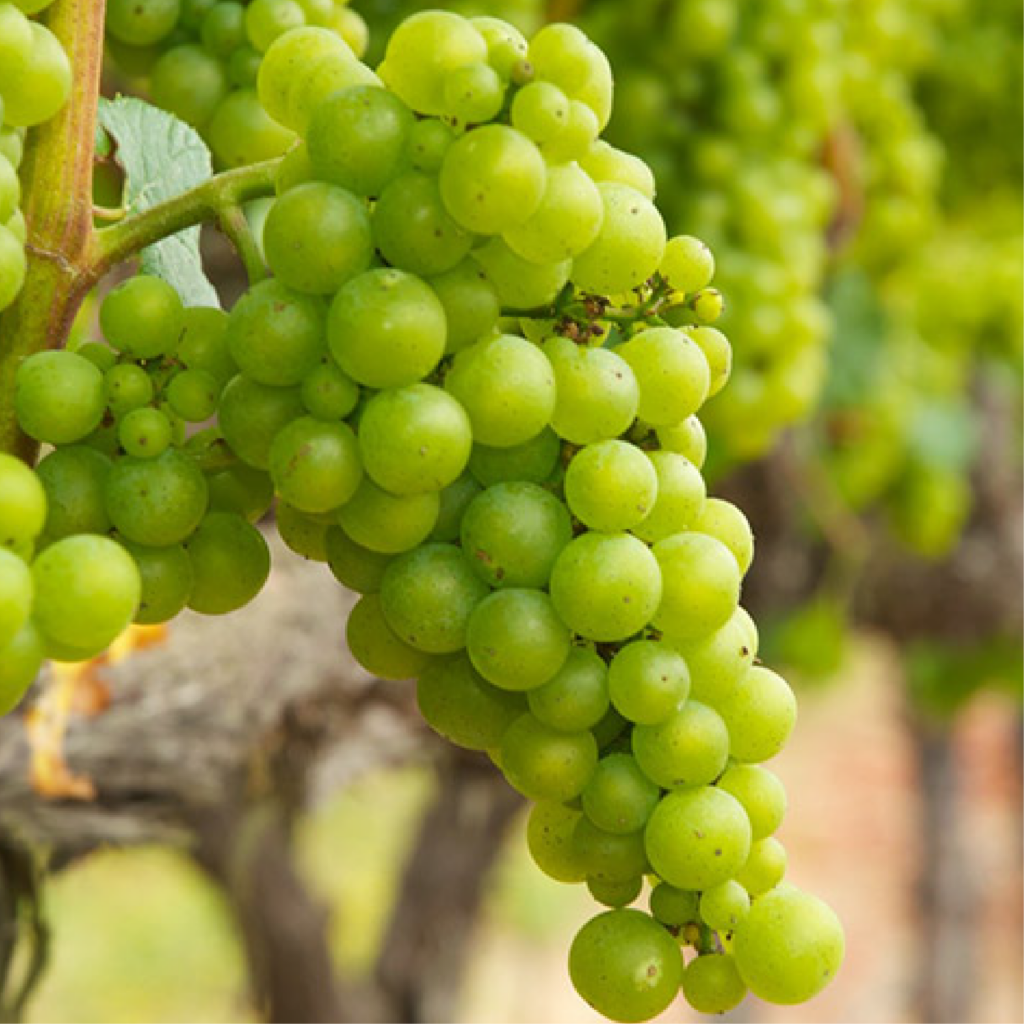
The cluster is small to medium-sized, with an average weight of 90 to 120 g, uniform on the vine, cylindrical-conical in shape, and fairly dense and compact. The berries are small to medium-sized and regular in their round shape. The skin is thin, translucent, yet moderately firm and elastic, and at full maturity it is beautiful pale greenish-yellow to attractive golden-yellow on the sun-exposed side, covered with a discreet bloom. The flesh is soft, exceptionally juicy, melting, and very sweet, with colorless, clear juice. The taste is rich, full, harmonious, and recognizably varietal.
It is moderately resistant to fungal diseases. It is highly susceptible to powdery mildew, Uncinula necator, and susceptible to downy mildew, so it requires regular, professional, and intensive preventive chemical protection throughout the entire growing season. In extremely humid and rainy years before harvest, it may be susceptible to gray mold of the cluster, Botrytis cinerea, due to the compactness of the clusters and the thin berry skin, which requires timely treatments. It shows very high natural resistance to low winter frosts and temperatures, with winter buds tolerating frosts down to -20°C without any damage, making it highly stable and adaptable for cultivation in different continental regions.
The root system is moderately strong, deep, and branched. It gives the best results and achieves premium wine quality on permeable, warm, calcareous, marly, clay-chalky, and moderately fertile soils, exclusively on hilly and sloping sites with good sun exposure, while it absolutely does not tolerate heavy, compacted, marshy, or overly wet lowland soils.
Our grafted grapevine plants are produced on highly compatible, certified rootstocks: Kober 5BB, Berlandieri x Riparia Kober 5BB, and SO4. This ensures a perfect and long-lasting anatomical graft union, excellent control of the variety’s natural vigor, and outstanding adaptability to skeletal and calcareous terrains with a high content of active lime in the soil.