
Gloster
Gloster originates from Germany, where it was developed in 1951 at the Jork Fruit Research Institute near Hamburg by crossing Glockenapfel and Richared Delicious, a Red Delicious mutant, and was released into production in 1969. Due to its exceptional fruit size, attractive dark red color, late ripening period, and outstanding resistance of the tree to winter frosts, it is a traditionally highly valued commercial autumn apple variety.
It is a fully cross-pollinated, self-sterile variety. It cannot set fruit with its own pollen, so the presence of compatible pollinator varieties that flower at the same time is essential in the orchard. The best and field-proven pollinators for this variety are Golden Delicious, Idared, Gala, and Granny Smith. It flowers medium-late, abundantly, and over a long period.
The tree is highly vigorous, strong, and robust, with characteristic distinctly upright branch growth at sharp angles, forming a pyramidal canopy that is prone to bare areas developing inside the crown. It enters the fruiting stage early when grafted onto low-vigor rootstocks, in the second or third year. Once it starts bearing, it produces regular, stable, and very high yields. Branch bending and training are essential during the first two years in order to widen the branch angles of the canopy, along with regular fruit thinning in early summer.
It belongs to the group of late autumn apple varieties. In our region and under continental climatic conditions, it reaches harvest maturity at the end of September and in early October.
Harvesting is carried out at the end of September and during the first half of October. It is very important to harvest it at the proper technological maturity; fruit harvested too late loses flesh firmness and is prone to internal browning in cold storage.
It has exceptionally good storage ability. In modern ULO cold storage with controlled atmosphere, it successfully retains full freshness, juiciness, and firmness for 5–7 months, until spring. Due to its firm flesh and thicker skin, it tolerates picking, sorting, mechanical packing, and long-distance transport very well, without the risk of crushing or juice leakage. It is primarily a premium table variety for fresh consumption toward the end of the year.
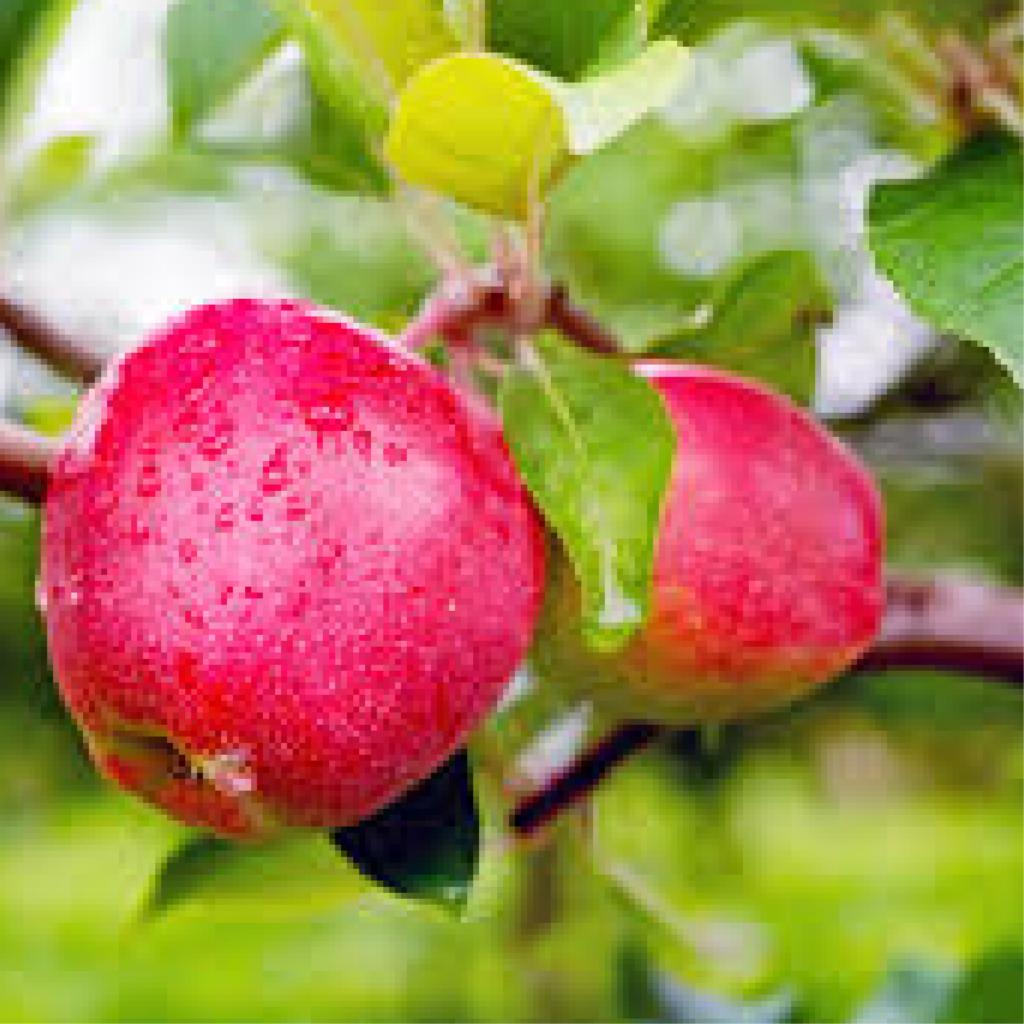
The fruit is large to very large, with an average weight of 180–230 g, and under good conditions even over 250 g. It is uniform and recognizable by its elongated-conical, bell-shaped form, with pronounced ribbing around the calyx end of the fruit, a characteristic inherited from Red Delicious. The skin is smooth, glossy, and firm, with a pale greenish ground color covered over more than 80–90% of the fruit surface by an intense, attractive dark red to purple-red color. The flesh is greenish-white to light yellow, very firm, compact, and exceptionally juicy. The taste is refreshing, moderately sweet, with fine pleasant acidity and a delicate aroma.
It is a moderately resistant variety. It shows outstanding resistance of the wood and flower buds to low winter temperatures, which explains its great popularity in colder regions. It has good natural resistance to powdery mildew. On the other hand, it is highly susceptible to apple scab on leaves and fruit, Venturia inaequalis, which requires regular, professional, and intensive preventive chemical protection. Due to the specific structure of the fruit, it is prone to moldy core, which requires enhanced fungicide protection during full bloom.
Our apple fruit trees are produced on highly compatible and certified rootstocks: M9, M9 T337, the essential standard for controlling the strong natural vigor of this variety in intensive orchards with a support system, M26, for medium-density orchards, and MM106, exclusively for poorer soils and home gardens.